
Sound dampening can be unsettling, often making you feel isolated from the community around you. It is typical to presume that muffled sound signifies chronic hearing deficiency, but the issue is often just a treatable cerumen obstruction.
Knowing how to tell these two conditions apart ensures you obtain the appropriate care, whether that is professional cerumen extraction or a clinical hearing test. Try not to fret if your hearing feels abruptly reduced. While only a clinician can verify the cause, reviewing these key markers of earwax vs. hearing loss can provide immediate insight.
Recognizing the Markers of Earwax Blockage
Earwax is actually a beneficial, natural secretion designed to shield the ear canal from dust and foreign debris. Problems occur when excessive wax builds up or becomes clogged.
Frequent signs of earwax buildup consist of:
- Gradual or sudden muffled hearing
- The perception that there is a mechanical obstruction in the canal
- Canal irritation or slight pain
- Persistent humming or ringing sounds
- Hearing that clears briefly after opening the jaw or chewing
Earwax-related hearing problems are often asymmetrical, affecting one ear more than the other. Luckily, once excess wax is safely removed, hearing often reverts to normal right away.
How Hearing Impairment Typically Presents
Permanent hearing changes, often triggered by aging or noise exposure, are gradual and persist even if the ear is completely clean.
Common indicators of permanent hearing impairment include:
- Difficulty understanding speech, particularly in loud environments
- Constantly asking others to repeat themselves
- Increasing the TV or smartphone audio higher than others desire
- Difficulty hearing high-frequency tones
- Auditory ability equally reduced on both sides
Unlike cerumen impaction, auditory impairment doesn’t usually cause a sensation of blockage or fullness.
Key Differences at a Glance
By analyzing the onset and specific markers, you can often identify which condition is impacting you:
- Timeline: Cerumen muffling can be rapid, but permanent loss takes years
- Duration: Wax issues are treatable and temporary, whereas impairment is usually long-term
- Sensations: Tactile “plugging” leads to cerumen, while the struggle to clarify sounds points to impairment
- Asymmetry: Cerumen often affects one ear; auditory impairment commonly impacts each
Reasons Not to Treat Yourself
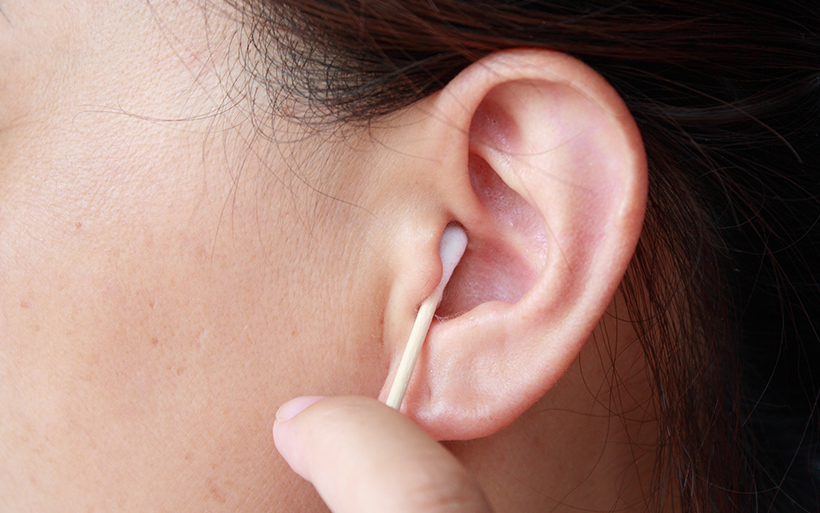
You may feel compelled to presume cerumen is the culprit — and grab for Q-tips or store-bought kits. Unfortunately, these can shove wax deeper and worsen the problem.
Medical experts warn that putting anything less substantial than your finger in your ear can result in eardrum damage and major impaction.
Postponing a clinical evaluation for real impairment can result in losing out on treatments that shield your long-term cognitive and communal health.
How a Clinical Exam Helps
A brief clinical exam is the only way to confirm if cerumen is actually the source of your muffled auditory issues.
If cerumen is found, safe extraction often clears signs on the spot.
When the ear is clear but auditory input is still muffled, a clinical test is necessary to evaluate your hearing integrity.
The NIDCD advises prompt assessment whenever shifts in auditory function conflict with your daily routine.
Finding the Correct Solution for Improved Hearing
Muffled auditory input doesn’t necessarily indicate irreversible damage.
In numerous instances, cerumen accumulation is the source, and it’s highly treatable.
Obtaining expert care guarantees you find the specific source and the proper solution for your hearing requirements.
Keep in mind that self-diagnosis is no replacement for a clinical exam when it comes to your auditory health.
Addressing the issue now stops the stress of the unknown and places you on the track to better hearing.
Rather than wondering what is wrong, schedule a rapid consultation with our audiologists to get the truth.