
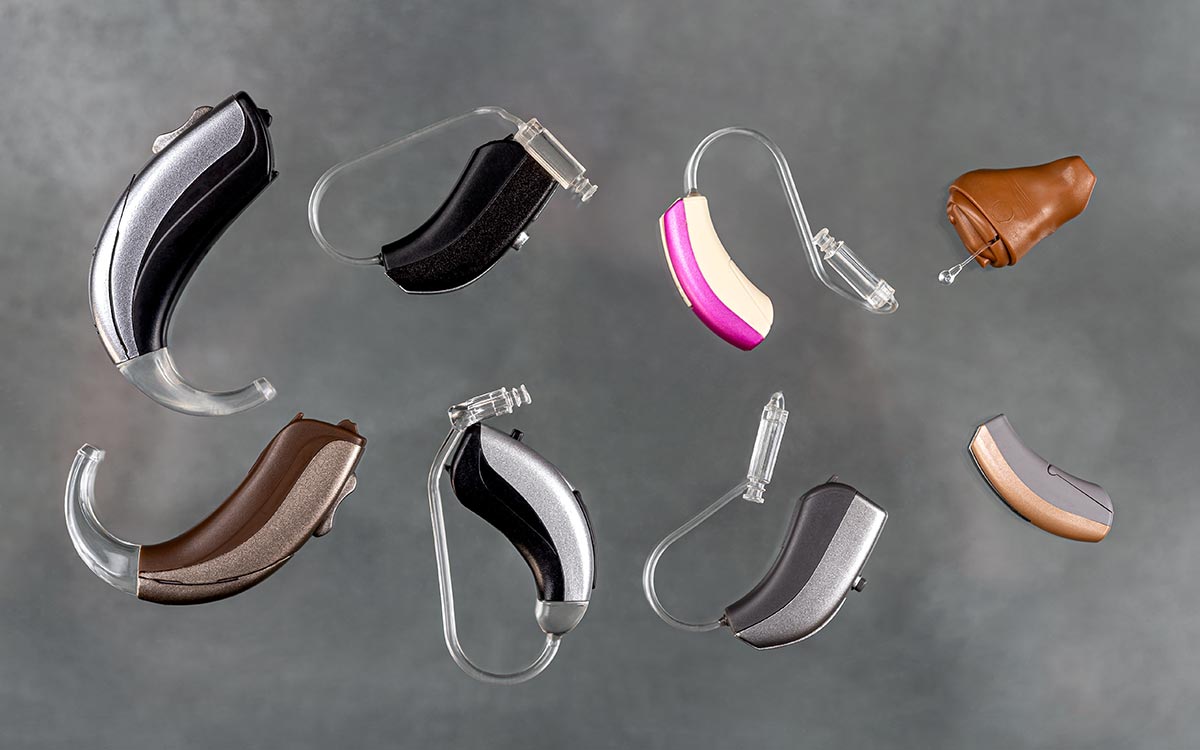
Choosing an instrument can feel daunting, especially when today’s units come in so many styles, sizes, and technology levels. However, an expert hearing solution exists for every person’s singular needs and daily habits. It’s all about learning which model fits perfectly with your specific requirements.
Feeling certain about your choice begins with knowing how different hearing aids function and compare. This guide examines the most common styles and highlights the specific advantages each one offers.
In-the-Canal (ITC) Hearing Aids
Basic Summary:
These hearing aids are placed partially inside the canal, making them visible only slightly from the outside.
Why people choose them:
- Less noticeable than conventional full-size models
- Custom-molded for ease
- A useful option for those with moderate hearing needs
First-time wearers frequently gravitate toward ITC aids because they strike a perfect compromise between size and performance.
Invisible-in-Canal (IIC) Hearing Aids
How they work:
As the most compact custom option, IIC aids represent the smallest available style. These devices sit so far inside the ear that they are nearly impossible to see.
Why individuals pick them:
- The best option for patients prioritizing appearance
- Pure sound quality due to mic placement
- So light and small that users frequently forget they are wearing them
Due to their small build, these aids are generally recommended for low-to-mid-range hearing loss and users who want total invisibility.
Full and Half-Shell ITE Varieties
Product Details:
These models occupy either the full or bottom half of the outer ear bowl. These are custom-fabricated for an exact fit based on your ear’s anatomy.
The Benefits:
- Larger size allows for more capabilities and longer battery life
- The physical size is simpler to grip and adjust for users with fine motor concerns
- A versatile option that can address even significant levels of hearing loss
Many patients prefer ITE devices because they provide an integrated, self-contained design that doesn’t hook over the ear.
BTE (Behind-the-Ear) Basics
Summary:
A BTE hearing aid is worn externally behind the ear for a stable fit. Audio travels through a specialized tube or custom-fit mold into the ear opening.
Key Advantages:
- Known for remaining exceptionally adaptable and robust
- Can be programmed to help users with everything from mild to profound loss
- Provide room for advanced features and rechargeable batteries
For those who prioritize a reliable device that is easy to manage and provides plenty of volume, BTE is an excellent choice.
Receiver-in-Canal (RIC) Hearing Aids
Mechanical Arrangement:
In an RIC model, the speaker is separated from the main casing and placed inside the canal via an ultra-fine wire.
Key Benefits:
- Known for creating some of the most authentic audio in the industry
- Users appreciate the slim design and comfortable fit for all-day use
- RIC technology is highly flexible for various different audiogram profiles.
Thanks to their comfort and visual appeal, RIC devices have become an industry standard.
Extended-Wear Hearing Aids
Operational Info:
These unique devices are designed to live in the ear canal for a month or more, managed by your hearing specialist.
The Draw:
- Perfect for wearers who want to bypass the routine of handling hearing aids daily
- They are virtually hard for others to notice because of their depth
- Built to withstand the stresses of sleep, exercise, and showering without being removed
For an autonomous method of hearing assistance, extended-wear technology is the top recommendation.
Wireless Smart Connectivity
Tech Specs:
Auditory aids with wireless connectivity that sync with smartphones, tablets, computers, and sometimes TVs.
Why people select them:
- Enjoy immediate sound streaming from your phone or TV right into your ears
- Modify settings via a mobile tool
- Enhanced convenience for modern lifestyles
This wireless technology is found in many modern behind-the-ear and in-the-canal models.
Alternative Implantable Options
Design Overview:
A surgical solution that works by vibrating the tiny bones inside the ear to provide amplified audio.
Why implants are utilized:
- Provides a solution for patients with anatomy that prevents the use of conventional aids
- Solves the problem of ear discomfort caused by regular hearing aids
These devices require an exhaustive medical review by an ear, nose, and throat expert.
Choosing the Right Model for Yourself
There is no single “best” hearing aid; rather, there is a best one for you, determined by your medical needs and personal comfort. An expert can provide the support needed to test out different styles and find the one that fits your life perfectly.
Take the initiative for your hearing health by booking an expert evaluation today. It’s a great first step toward better hearing and more confident communication every day.
Sources:
https://www.mayoclinic.org/diseases-conditions/hearing-loss/in-depth/hearing-aids/art-
20044116
https://www.hearinglife.com/hearing-aids/types
https://www.nidcd.nih.gov/health/hearing-aids